
.png "العربية")


Aesthetic Beauty, Medical Precision
Facial filler injections, especially those using hyaluronic acid, have become one of the most popular methods for facial rejuvenation. While the procedure is generally safe and minimally invasive, it requires a deep understanding of facial anatomy—particularly the vascular structures beneath the skin. Why? Because injecting into or near critical blood vessels can cause severe complications like skin necrosis or, in rare cases, vision loss.
That’s why it’s essential to choose a clinic and specialist who are not only skilled but also highly knowledgeable about vascular danger zones of the face.
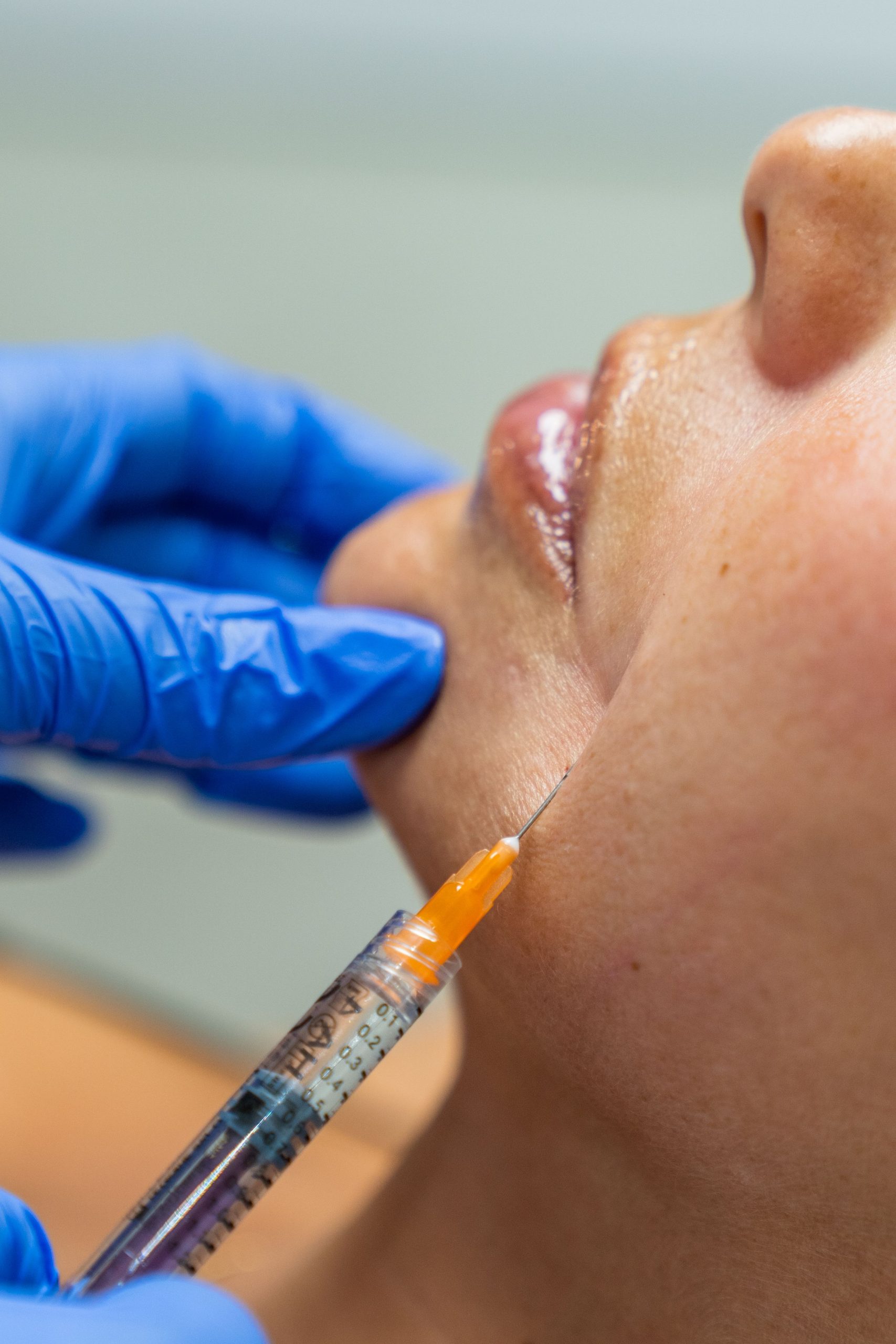
What Are Vascular Danger Zones?
“Danger zones” refer to specific areas on the face where important arteries and veins are located very close to the surface. If a filler is accidentally injected into one of these blood vessels, it may block blood flow—a complication known as vascular compromise. This can lead to serious issues like:
Tissue death (necrosis)
Scarring
Blindness (in extremely rare but reported cases)
Key Danger Zones on the Face
A study by Wollina and Goldman (2020) provides a detailed map of these danger zones and offers important guidance for safe filler application.
1. Temporal Region
Contains superficial temporal artery.
Complications may include swelling, bruising, and in rare cases, skin necrosis.
Recommendation: Use a blunt cannula and inject slowly with low pressure.
2. Glabella (Between the Eyebrows)
High-risk zone due to supratrochlear and supraorbital arteries.
One of the most dangerous areas—linked to cases of vision loss.
Recommendation: Avoid deep injections; use low-volume filler.
3. Nasal Region
Includes the angular and dorsal nasal arteries.
Incorrect injection may result in skin necrosis or even blindness.
Recommendation: Inject slowly, with minimal pressure, and preferably with a cannula.
4. Infraorbital Region
Contains the infraorbital artery.
Risk of swelling and bruising; more serious if vessel is occluded.
Recommendation: Know the anatomy well and avoid bolus injections.
5. Nasolabial Fold
Crossed by the facial artery and its branches.
Although popular for filler, this zone requires extra care.
Recommendation: Superficial placement with slow injection.
6. Lips
Vascularized by the superior and inferior labial arteries.
Lip filler is common, but complications include asymmetry, swelling, or rare cases of vascular occlusion.
Recommendation: Aspiration before injection, inject slowly, and never use high volumes.
7. Chin
Close to the mental artery.
Rare but serious adverse events have been reported.
Recommendation: Be cautious of depth and inject slowly using the proper angle.
Are Only Hyaluronic Acid Fillers Risky?
While this article primarily refers to hyaluronic acid fillers, the same precautions apply to other filler types, including calcium hydroxylapatite and autologous fat transfer. No matter what material is used, vascular complications can occur if anatomy is not respected.
Innovations to Improve Safety
The aesthetic industry is constantly evolving, and new technologies aim to improve filler safety. These include:
Ultrasound-guided injections for real-time vessel visualization
Blunt-tipped cannulas instead of sharp needles
Pre-injection aspiration to check for vessel entry
Choosing clinics that invest in these innovations can reduce your risk significantly.
Final Word: Safety Over Speed
Facial rejuvenation is not just about beauty—it’s about safety, expertise, and long-term satisfaction. That’s why all filler procedures at our clinic are performed by trained specialists who understand facial anatomy in depth and use the latest safety protocols to minimize any risks.
If you’re considering facial fillers, book a consultation today and let our experts guide you safely on your beauty journey.
Reference
Wollina, U., & Goldman, A. (2020). Facial vascular danger zones for filler injections. Dermatologic Therapy, 33(6), e14285. https://doi.org/10.1111/dth.14285